Where the Wild Things Are
About This Book
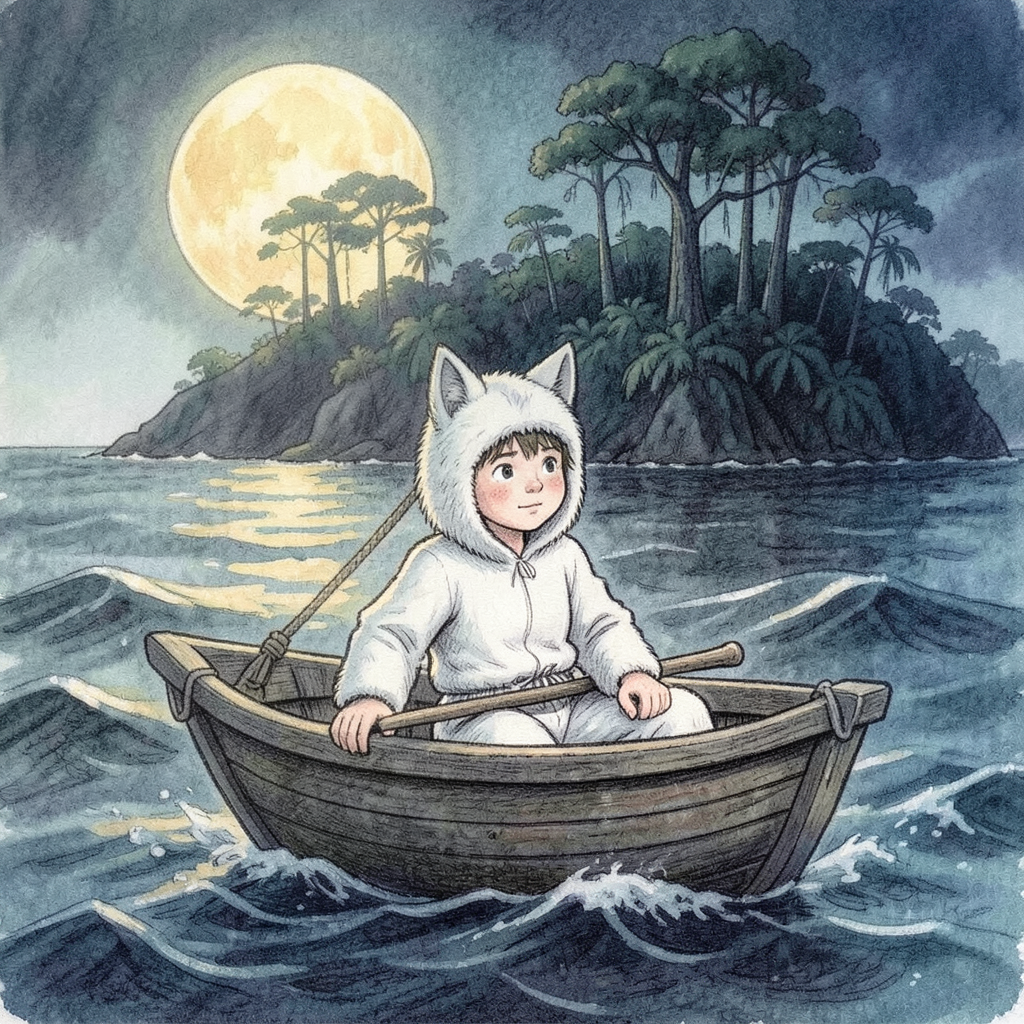
After being sent to bed without supper for his wild behavior, Max's room transforms into a forest, and he sails to the land of the Wild Things, where he becomes their king. But soon he misses home and returns to find his supper waiting — still hot.
Themes
ImaginationEmotionsAdventure
Best For
- Children who struggle with anger or big emotions and need a story that validates those feelings without endorsing harmful behavior
- Bedtime reading when a child has had a difficult day and needs a gentle emotional landing
- Classroom read-alouds focused on social-emotional learning, sequencing, or illustration study
- Introducing the concept that imagination is a healthy and powerful coping tool
- Families who want a short book that reliably sparks deep conversation despite its few words
Why Parents Love This Book
Where the Wild Things Are endures not because it wraps childhood neatly, but because it tells the truth about it. Maurice Sendak understood that children feel enormous, unruly emotions — rage, the need to dominate, the ache of loneliness — and he honored those feelings rather than dismissing them. Max is sent to his room in disgrace and, instead of crying or apologizing, conjures an entire kingdom where he is king. The Wild Things are fearsome and magnificent, yet Max tames them "by the magic trick of staring into all their yellow eyes without blinking once." That moment resonates because it shows children their own inner power. And then, quietly, the homesickness comes. He gives up his crown and sails home, where supper is waiting — still hot. That final detail says everything about unconditional love without using those words at all. Sendak's crosshatched ink illustrations grow larger as Max's imagination swells, then shrink back to reality. It is a masterclass in picture-book form, and over six decades it has not aged a day.
Reading Tips for Parents
Before reading, set the stage by asking your child if they have ever felt so angry they wished they could run away somewhere wild — this primes them to connect with Max emotionally rather than judge his behavior. Read the "wild rumpus" spread slowly and let your child absorb the wordless pages; resist the urge to fill the silence. When Max turns for home, pause and ask why he might want to leave even though he was king. After the story, circle back to the final line: "and it was still hot" — many children need a moment to understand what that means about the people waiting for them at home. This book is also a gentle opening for conversations about anger: what Max felt, what he did with it, and how home felt safe again afterward.
Awards & Recognition
- Caldecott Medal, 1964 (American Library Association — awarded for distinguished illustration in an American picture book)
- Named to the New York Public Library's list of 100 Great Children's Books
- National Book Award–winning author (Maurice Sendak received the Hans Christian Andersen Award in 1970, the field's highest international honor for a children's author-illustrator)
Educational Value
This book helps children develop skills across multiple areas:
- Social-emotional learning: Explores the full arc of a tantrum — from anger, to fantasy, to resolution — giving children language and imagery for their own big feelings.
- Vocabulary: Introduces vivid, unusual words such as 'rumpus,' 'gnashed,' 'terrible,' and 'tamed' that expand expressive language naturally within context.
- Sequencing and narrative structure: The story follows a clear three-part journey (home, away, home again) that helps early readers understand beginning, middle, and end.
- Visual literacy: Sendak's illustrations grow to fill the page during Max's adventure and shrink back during his return — teaching children how pictures carry meaning alongside words.
- Imagination and creative thinking: Max's room-to-forest transformation models how play and imagination can be powerful tools for processing difficult emotions.
- Empathy: Seeing Max choose home over power helps children consider what relationships and belonging mean to them personally.
Discussion Questions
Use these questions to spark conversation before, during, or after reading:
- Why do you think Max acted so wild at the beginning of the story? Have you ever felt that way?
- How did Max become king of the Wild Things? What does that tell you about being brave?
- The Wild Things roared and showed their terrible claws, but Max was not afraid. What do you think gave him that courage?
- Why did Max decide to leave even though he was king of all the Wild Things?
- What do you think it means that Max's supper was still hot when he got home?
Content Notes for Parents
The Wild Things have clawed hands, sharp teeth, and glowing yellow eyes, and some younger or more sensitive children may find them startling on first encounter; most children ages 4 and up take them in stride and find them exciting rather than frightening. Max is punished by being sent to bed without supper, which is worth a brief conversation if your family does not use food-related consequences.
Frequently Asked Questions
What age is Where the Wild Things Are best suited for?
The book is generally recommended for ages 4 to 8. Children younger than 4 may not yet follow the emotional arc, and some toddlers find the Wild Things' faces unsettling. By age 4 most children are deeply engaged, and the book continues to reward re-reading well into early elementary school as children pick up on new layers of meaning.
Are the Wild Things too scary for young children?
Most children ages 4 and up find the Wild Things exciting rather than frightening — especially because Max tames them so confidently. If your child is particularly sensitive to monster imagery, preview the illustrations first and introduce the book during the day rather than right before sleep. Many parents find that reading it a second time quickly dissolves any initial hesitation.
How can I use this book to talk about anger with my child?
The story gives you a ready-made structure: acknowledge the feeling ('Max was really angry, wasn't he?'), explore the fantasy ('What would your wild place look like?'), and then return to the real question ('What helped Max feel better?'). Avoid using the book as a lecture tool right after a tantrum; it works better as a calm, exploratory conversation during or after a relaxed read-aloud.
My child wants me to read it every night. Is that normal?
Absolutely. Repetitive reading of a favorite book is developmentally healthy and signals that the child is processing something meaningful in the story. Each re-reading builds vocabulary, comprehension, and emotional familiarity. Lean into it — many adults who grew up with this book remember it as a defining childhood experience precisely because they heard it dozens of times.
What are some similar books we might enjoy after this one?
If your child loves the emotional honesty and imagination, try In the Night Kitchen (also by Sendak), The Story of Ferdinand by Munro Leaf (a quiet child in a world that expects wildness), or Sylvester and the Magic Pebble by William Steig. For the adventure-and-home arc, Harold and the Purple Crayon by Crockett Johnson is a natural companion.